How to Apply Sheet Mask Correctly for Maximum Results.
Sheet masks are one of the easiest and most satisfying ways to give your skin a quick boost of hydration, brightening, and active ingredients. But here’s the truth most people miss: how you apply a sheet mask matters as much as the mask itself.
Apply it the right way and you’ll see better absorption, visible glow, and long-term improvements in texture, pigmentation, and barrier health. Apply it incorrectly and you might waste the product or even irritate your skin.
This guide will show you the correct step-by-step method to get maximum results from your sheet mask — with special notes for Indian skin (pollution, humidity, and sensitivity).
Why Proper Sheet Mask Application Matters
Sheet masks work through occlusion — the sheet creates a barrier that helps active ingredients penetrate deeper while preventing evaporation. When done right, they deliver better hydration, soothe inflammation, and enhance the effects of ingredients like niacinamide, azelaic acid, retinol, or alpha arbutin.
For Indian skin, which often deals with dehydration (despite humidity), pollution-induced dullness, and post-acne marks, a well-applied sheet mask can be a powerful weekly treatment.
Step-by-Step: How to Apply a Sheet Mask Correctly
Follow these steps for best results:
Step 1: Start with Clean Skin Always apply a sheet mask on freshly cleansed skin.
- Use a gentle cleanser to remove dirt, oil, sunscreen, and pollution.
- If you wear makeup or have been outdoors, do a double cleanse. Why it matters: Actives can’t penetrate properly through a layer of grime or sunscreen.
Step 2: Tone or Apply Essence (Optional but Recommended) After cleansing, pat your skin with a hydrating toner or essence. This slightly dampens the skin and creates a better base for absorption. Skip heavy serums before the mask — let the mask do the heavy lifting.
Step 3: Unfold and Position the Mask Correctly
- Take the sheet mask out of the packet and gently unfold it.
- Align the cutouts with your eyes, nose, and mouth.
- Press the mask firmly onto your skin, starting from the centre and moving outwards.
- Smooth out all wrinkles and press out air bubbles — this ensures full contact with your skin.
Pro Tip: Slightly damp skin helps the mask stick better and improves ingredient absorption.
Step 4: Relax and Leave It On for the Right Time
- Most sheet masks are designed for 15–20 minutes.
- Set a timer. Do not leave it on longer than recommended (especially with actives like retinol).
- While waiting, you can lie down or do a relaxing activity. Avoid talking too much as it can create folds.
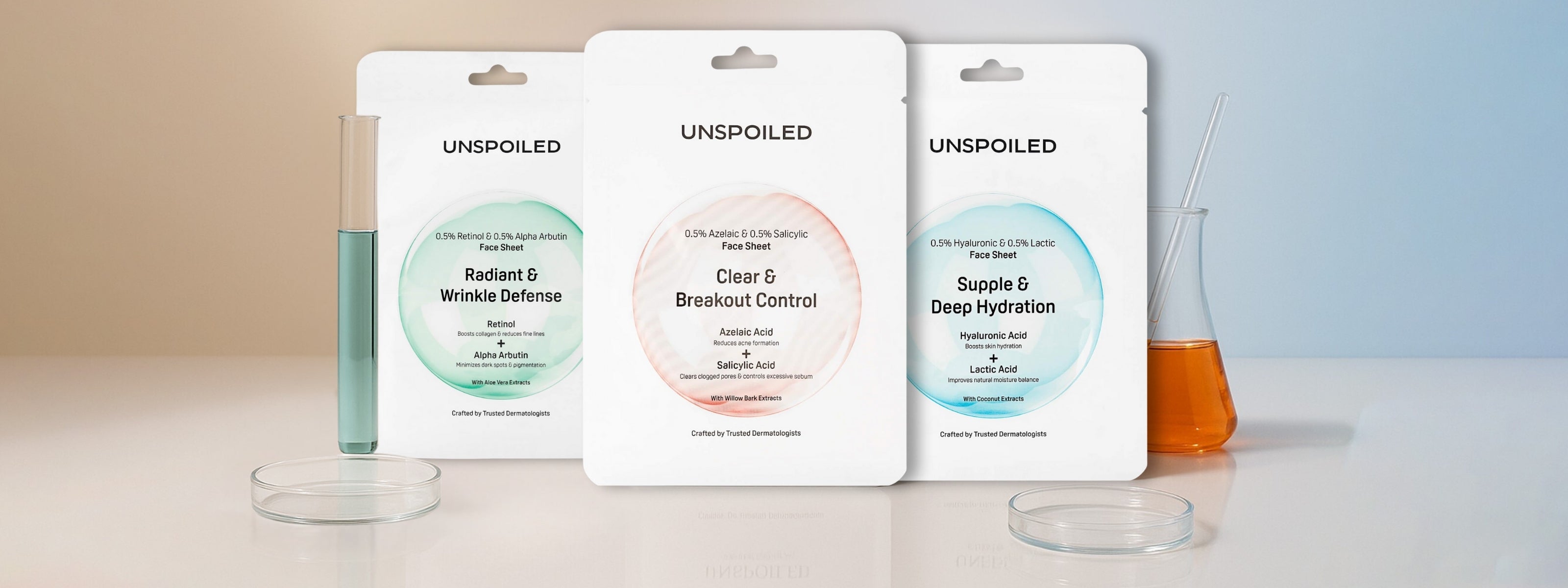
Important for Retinol Masks: If using a retinol sheet mask (like Unspoiled’s 0.5% Retinol + 0.5% Alpha Arbutin), apply it in the evening only and never exceed the suggested time.
Step 5: Remove and Pat In the Remaining Serum
- Gently peel off the mask from the edges.
- Do not rinse your face.
- Use clean hands to gently pat and massage the leftover serum into your skin until fully absorbed. This leftover essence is concentrated goodness — don’t waste it!
Step 6: Seal It In with Moisturizer Always follow with a moisturizer to lock in hydration and support your skin barrier. If you used a retinol or exfoliating mask, apply a soothing, barrier-repair moisturizer.
Step 7: Sunscreen (Next Morning – Non-Negotiable) If you used any active ingredient mask (especially retinol or AHA), apply broad-spectrum sunscreen the next morning without fail. Retinol increases sun sensitivity.
Pro Tips for Maximum Results (Indian Skin Edition)
- Frequency: 1–2 times per week is ideal. Overuse (especially with actives) can irritate the skin.
-
Choose the Right Mask for Your Concern:
- Brightening & Pigmentation → Alpha Arbutin or Niacinamide masks
- Anti-aging & Texture → Retinol masks (start slow)
- Hydration & Barrier Repair → Hyaluronic acid or ceramide masks
- Patch Test New Actives: Especially important with retinol sheet masks.
- Store Masks Correctly: Keep unused masks in a cool, dry place. Once opened, use immediately.
- Layer Smartly: Use sheet masks on “skin cycling” rest days if you’re using strong actives in your routine.
- For Oily/Combination Indian Skin: Don’t skip moisturizer after — dehydration can actually increase oil production.
Common Mistakes to Avoid
| Mistake | Why It’s a Problem | Better Approach |
|---|---|---|
| Applying on dirty skin | Blocks absorption | Always cleanse first |
| Leaving mask on too long | Can cause reverse osmosis (dries skin) | Stick to 15–20 mins |
| Not smoothing air bubbles | Uneven results | Press mask firmly onto skin |
| Rinsing off remaining serum | Wastes active ingredients | Pat it in instead |
| Skipping moisturizer | Skin can feel tight or irritated | Always seal with moisturizer |
| Using retinol mask in morning | Increases sun sensitivity | Use only at night + SPF next day |
How Unspoiled’s Retinol + Alpha Arbutin Sheet Mask Fits In
Our 0.5% Retinol + 0.5% Alpha Arbutin sheet mask is specially formulated for Indian skin — gentle yet effective for brightening, reducing appearance of dark spots, and improving texture without overwhelming the barrier.
When applied correctly (as per the steps above), it delivers targeted actives while the sheet helps lock in hydration. Use it 1x per week at night, followed by a good moisturizer, and always wear sunscreen the next day.
Final Thoughts
Sheet masks are not just a pampering treat — when used correctly, they become a powerful part of your skincare routine. The key is preparation, proper application technique, and smart aftercare.
Consistency beats intensity. One well-applied sheet mask per week will give you better results than rushing through one every day.
Ready to glow? Save this guide and try the method with your next sheet mask session.